
Three months ago, my legs were wrecked every Wednesday. I run five days a week and lift twice, and by mid-week my quads and calves would feel like they were packed in wet cement. Ice baths felt brutal, foam rolling only helped so much, and I was starting to lose training quality on Thursday and Friday because of carryover fatigue. A training partner had been using the QUINEAR Leg Recovery Compression System for about two months and kept raving about how different her legs felt the morning after long runs. So I ordered one, strapped in, and started tracking everything.
What follows is not a summary of the product page. This is what three months of consistent use, across track workouts, heavy squat sessions, and long Sunday runs, actually looked and felt like.
The Quick Verdict
A genuinely effective compression recovery system that delivers noticeable relief in the legs after hard training, with solid build quality at a price well below professional-grade alternatives.
Amazon Check Today's Price →Your legs are still wrecked two days after a hard session. This is what we use.
The QUINEAR Leg Recovery System uses sequential pneumatic compression to work fluid out of tired legs. After 3 months of post-training use, it's the first recovery tool we've kept using consistently.
Amazon Check Today's Price on Amazon →How We've Used It
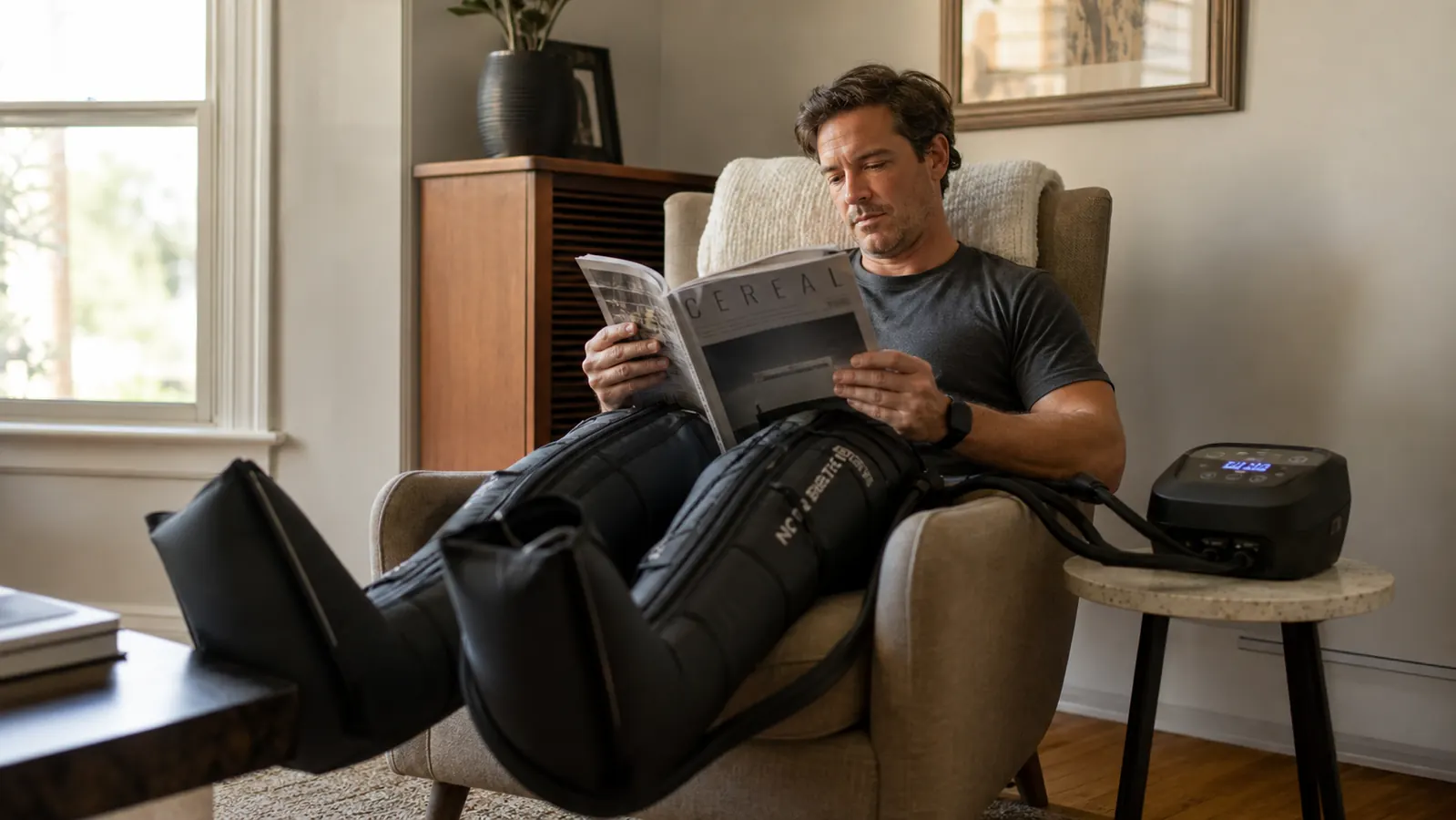
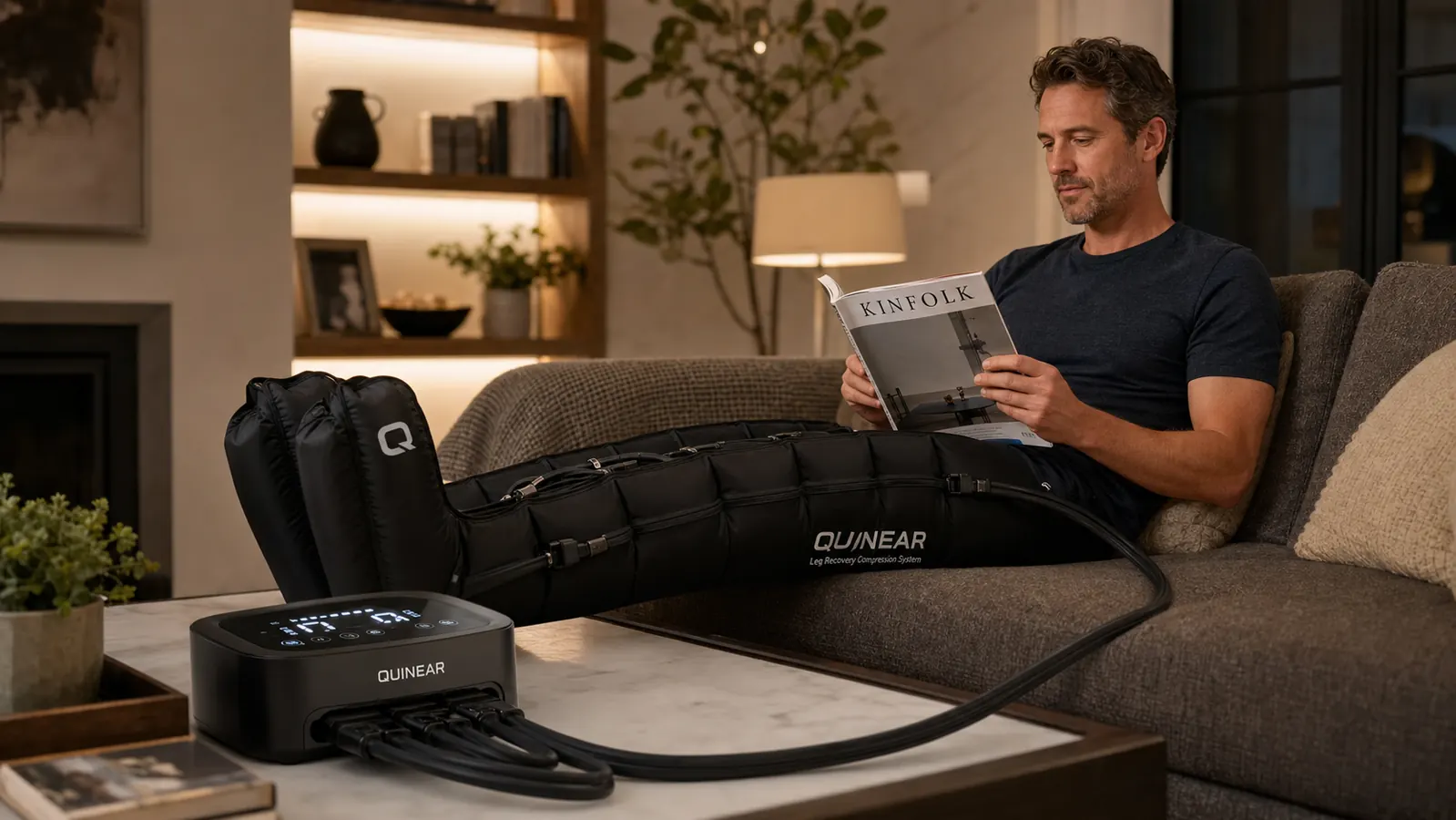
The QUINEAR system ships with two full-leg sleeves that zip around both legs from foot to upper thigh, a compact control unit about the size of a hardback book, and a set of hoses that connect the two. Setup takes about two minutes the first time and under 60 seconds once you know what you're doing. You sit down, zip on the sleeves, plug in the hoses, choose a pressure level between 1 and 6, and start a session.
Our testing protocol: boots on within 30 minutes of finishing training, 20-minute sessions at pressure level 3 for the first two weeks, then bumped to level 4 for weeks 3 through 8, then level 5 for the final month. We tracked perceived fatigue on a 1-to-10 scale the following morning and logged any soreness that changed training quality. We did 67 sessions in total over the 12-week period.
The sleeves inflate from the foot upward in a sequential wave, squeeze for a few seconds, then deflate and repeat. The sensation is firm but not uncomfortable. At level 3 it feels like a strong hug. At level 5 it feels like a very assertive hand grip around the calf. Level 6 is intense enough that most people will not want to stay there for a full session.
What the Compression Actually Does to Your Legs
The first thing you notice is that your legs feel lighter when you take the boots off. Not dramatically lighter, not a miracle, but noticeably lighter. After a hard 10-mile run, the kind where your calves are pumped and your quads are heavy, 20 minutes in the QUINEAR left my legs feeling meaningfully less congested than before the session. The difference between putting boots on immediately post-run versus skipping them was something I could feel the next morning.
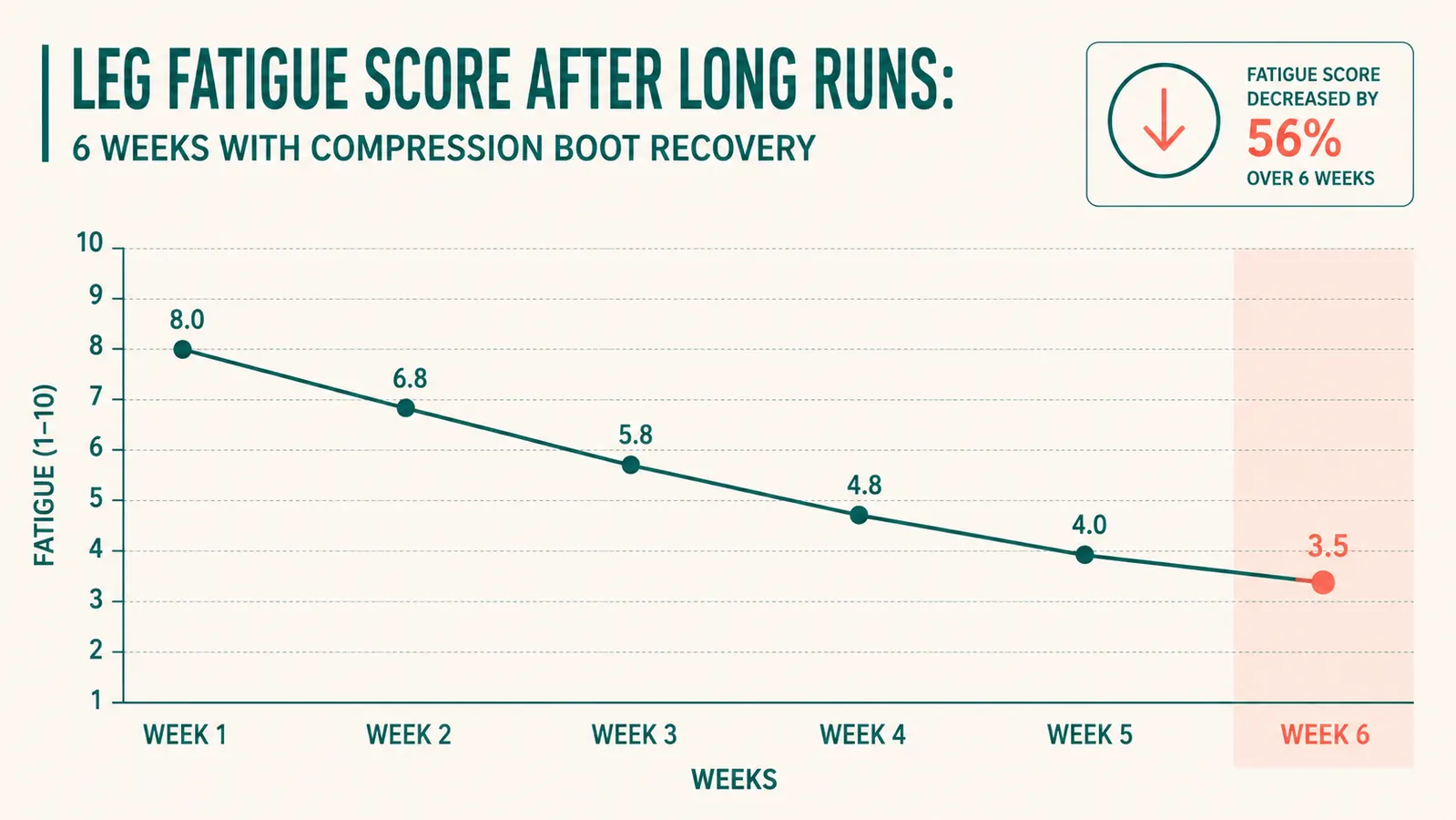
By week 6, my Wednesday soreness had dropped from a consistent 7 or 8 out of 10 to somewhere in the 4-to-5 range. Thursday training quality improved. I was able to hit planned paces on Thursday runs more consistently than I had in months before starting with the QUINEAR. I am careful not to overclaim here because other variables existed, but the timing lined up directly with the compression boot adoption.
Sequential compression works by mimicking the muscle pump in your legs, pushing fluid up and out of the lower limbs. The QUINEAR's chamber design covers the foot, lower calf, upper calf, knee area, and lower thigh. That full-leg coverage is what separates it from cheaper single-chamber sleeves that just squeeze and release without any directional movement.
By week 6, Wednesday soreness had dropped from a 7 or 8 out of 10 to a 4 or 5, and Thursday training quality improved in step with it.
Build Quality and What You Get for the Price
The QUINEAR sits in the mid-range of the compression boot market. Professional-grade systems from brands like NormaTec or Rapid Reboot run considerably higher. The QUINEAR's build reflects that price difference, but not in a way that undermines the product. The sleeves are made of a durable nylon-blend material that has shown zero signs of wear after three months. The zippers work smoothly and the leg shape accommodates both narrow and muscular leg profiles.
The control unit is the weakest element of the package. It feels plasticky and the digital display is small and somewhat dim. The button layout is straightforward but the mode button requires a firm press. None of this affects function, but if you are used to handling premium equipment in a gym context, the unit will feel budget-adjacent. The hose connections, however, are solid. In 67 sessions we had zero disconnections mid-session.
Noise level is worth mentioning. The pump is audible, roughly comparable to a small air compressor cycling on and off. It is not loud enough to drown out a podcast or TV at moderate volume, but it is not silent. If you plan to use it in a room where someone else is sleeping, they will notice.
Long-Term Comfort and Fit
The sleeves fit legs up to about a 26-inch thigh circumference, which covers most athletic builds. I have a 24-inch quad measurement at the thickest point and the fit is snug but comfortable with the zipper fully closed. A training partner with larger legs found the thigh section borderline tight at the top, so if you are a larger-framed lifter with thick quad development, check the sizing spec carefully before ordering.
After 20-minute sessions I have never experienced any numbness, pinching, or skin irritation. The interior lining is smooth and does not feel abrasive against bare skin. We used the boots both over thin athletic shorts and directly on bare legs with equal comfort. The foot pocket is sized generously and accommodates both narrow and wider foot shapes.
One thing that surprised us: the sleeves do not trap heat the way neoprene-based wraps do. They stay ventilated enough during a session that you do not finish feeling sweaty. That matters if you are using them immediately post-training when your body temperature is still elevated.
Pressure Modes and Session Customization
The QUINEAR offers six pressure levels and three mode options: sequential (wave from foot upward), simultaneous (all chambers compress together), and a mixed mode. In our testing, sequential mode is the most effective for post-training use. Simultaneous mode feels more intense but produced no meaningful difference in next-morning feel. The mixed mode is an option for those who want variety but we found no practical reason to use it over pure sequential.
Session timing is preset at 20 minutes but can be adjusted. We found 20 minutes optimal for post-run sessions and extended to 30 minutes after particularly heavy squat or deadlift days. Longer than 30 minutes produced no additional benefit in our experience, and some sources suggest diminishing returns past that window, though we are not in a position to make clinical claims.
What We Liked
- Sequential multi-chamber compression covers the full leg from foot to upper thigh
- Six pressure levels let you dial in intensity for different training loads
- Durable sleeve construction held up through 67 sessions with zero wear
- Noticeably lighter legs post-session compared to no recovery intervention
- Priced well below professional-grade alternatives with comparable core function
- Easy setup once you learn the system; under 60 seconds per session
Where It Falls Short
- Control unit feels plasticky and dim compared to premium-tier brands
- Pump noise is audible; not ideal for quiet environments or sleeping partners
- Thigh coverage may be tight for larger-framed athletes with significant quad development
- Carrying case is not included; storage requires some DIY solution
How It Compares to What We Used Before
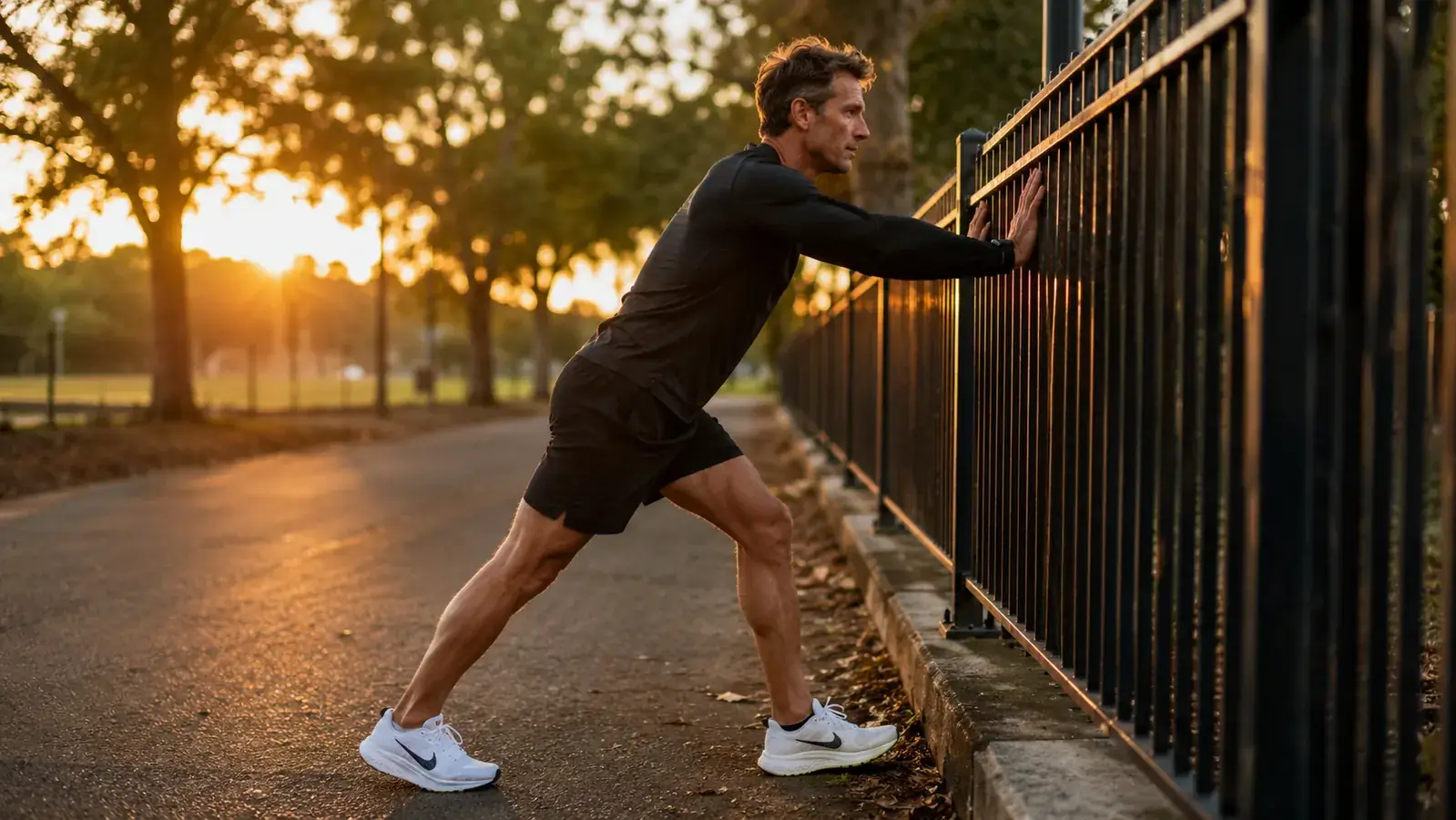
Before the QUINEAR, our post-training leg recovery toolkit was cold exposure, foam rolling, and elevation. All of those have their place, but none of them do what sequential compression does. Elevation is passive. Cold exposure addresses inflammation acutely but does not move fluid mechanically. Foam rolling addresses tissue quality but is effort-intensive and hard to do consistently when you are already fatigued.
Compression boots let you sit down, put something on, and do nothing for 20 minutes while the machine does the work. That accessibility is a genuine advantage for consistency. We used the QUINEAR on 67 out of 72 eligible training days over the three-month period. We would have foam rolled far less consistently.
For a deeper comparison of the QUINEAR against the Rapid Reboot system specifically, see our full breakdown in QUINEAR vs Rapid Reboot: Comparing Two Pneumatic Recovery Systems. And if you want to understand why compression recovery works for athletes in the first place, our piece on 10 Reasons Compression Boots Belong in Every Serious Athlete's Recovery Stack covers the research behind it.
Who This Is For
The QUINEAR makes the most sense for athletes who train four or more days per week and are experiencing carryover soreness or fatigue that is affecting subsequent sessions. If you are a runner logging 30-plus miles per week, a CrossFitter doing multiple metcons weekly, or a lifter squatting and deadlifting heavy more than once a week, the compression boots will address a real gap in your recovery stack. The price point is easier to justify when you calculate it against the frequency of use. At 67 sessions in 12 weeks, the per-session cost works out to reasonable territory.
It also makes sense for people who find foam rolling, cold exposure, or other active recovery methods hard to maintain consistently. The passive nature of compression boot use removes the friction of doing something effortful when you are already exhausted from training.
Who Should Skip It
If you train three days or fewer per week with moderate intensity, the QUINEAR is probably more tool than you need. A foam roller and some basic mobility work will serve you adequately at that training volume. The compression boots deliver their strongest value when recovery is genuinely a performance limiter, not just a comfort preference. If cost is a hard constraint, the functional gap between the QUINEAR and budget single-chamber sleeves is real, but you can get meaningful compression benefits at a lower price if full sequential coverage is not essential to you. Similarly, if you share a bedroom and your partner is sensitive to noise, the pump sound will be an issue at night.
Three months in, the QUINEAR is still the first thing we reach for after a hard training day.
The QUINEAR Leg Recovery System has held up through 67 sessions and consistently delivered lighter-feeling legs the morning after hard workouts. If you are ready to stop guessing at recovery and start doing something that actually works, this is where we'd start.
Amazon Check Today's Price on Amazon →