
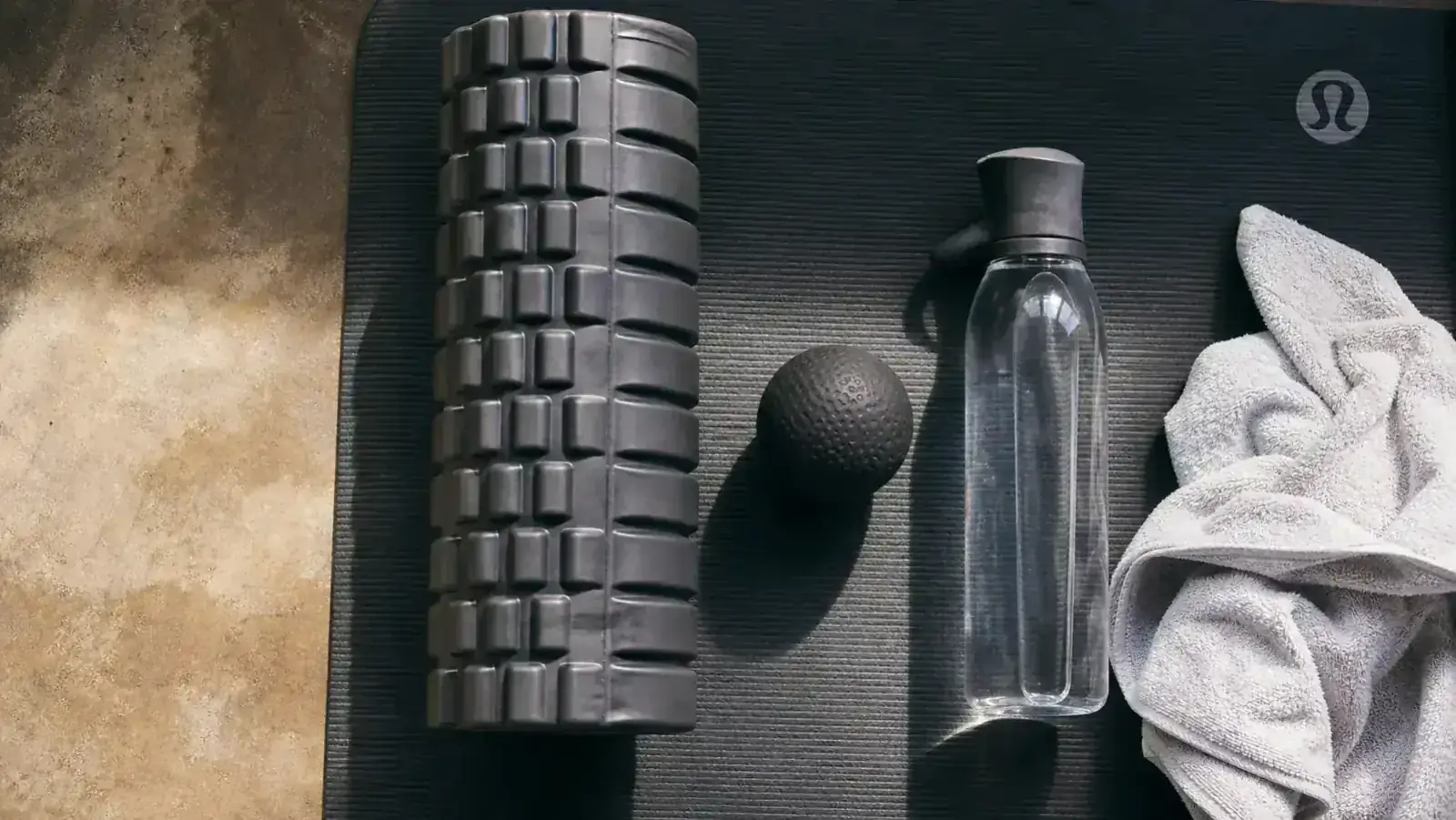
If you have ever stood in a sporting goods aisle holding a lacrosse ball in one hand and a foam roller in the other, wondering which one is actually worth your money, you are not alone. We spent several months rolling out tight quads, stubborn IT bands, and knotted upper backs with both tools to give you a direct, practical answer. The short version: they do different jobs, and one is substantially better at most of them.
The TriggerPoint GRID 2.0 Foam Roller is the primary winner in this comparison. It covers more surface area, works on more muscle groups, and gives you meaningful control over pressure and angle. A lacrosse ball has a real and specific role, but if you are choosing one tool to anchor your recovery routine, the GRID 2.0 is the clearer choice. Here is how we got there.
| TriggerPoint GRID 2.0 | Standard Lacrosse Ball | |
|---|---|---|
| Price Range | ~$75 (current Amazon price) | $3-8 for a standard ball |
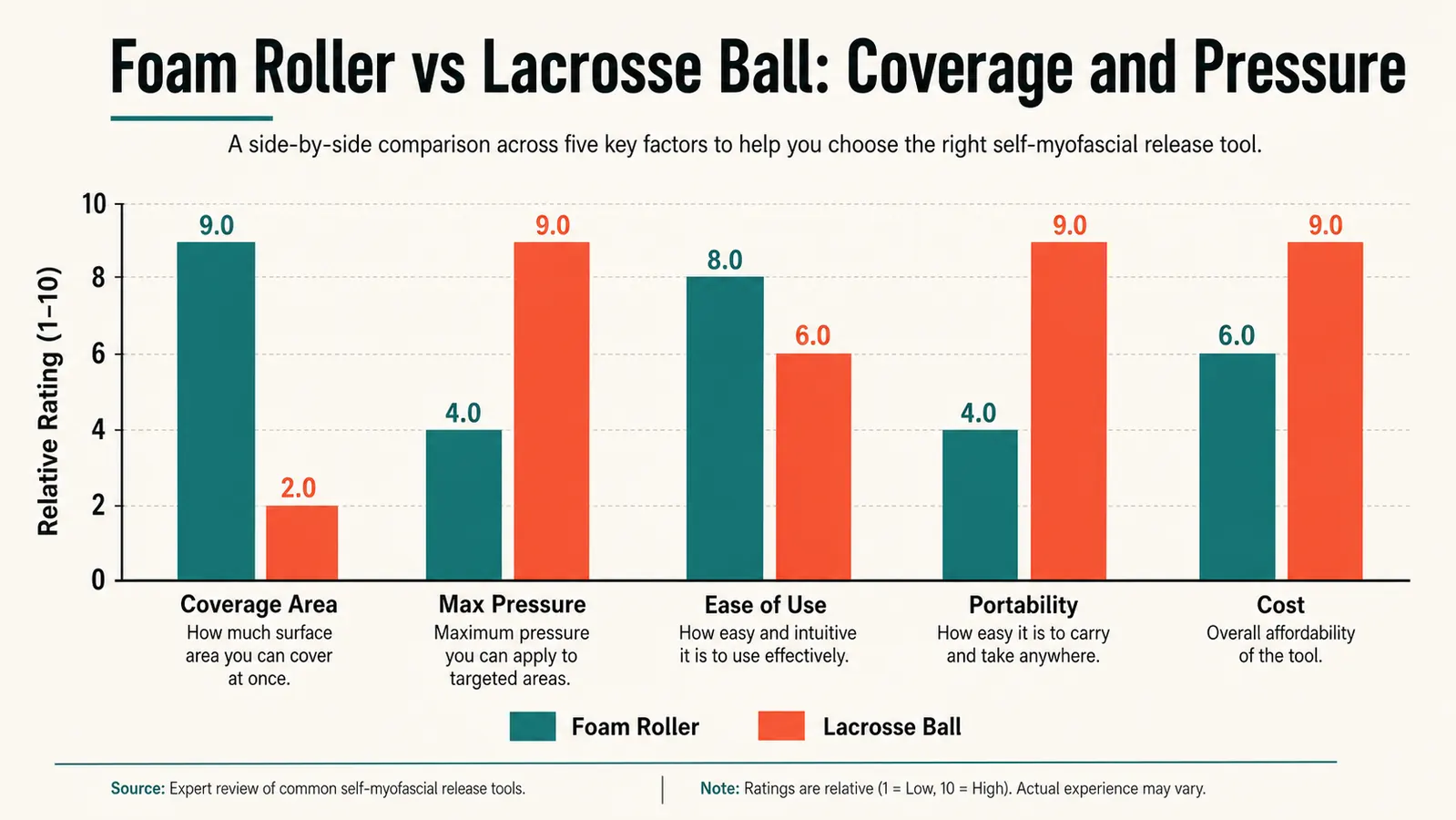
| Coverage Area | 13 inches long, full muscle-length sweeps on quads, hamstrings, IT band, calves, thoracic spine | 2.5-inch diameter; one pressure point at a time |
| Pressure Control | Moderate to firm; multi-density grid surface distributes load; body weight partially unloaded through arms | Very high, concentrated; full body weight onto one spot; difficult to self-regulate |
| Target Precision | Good for large muscle groups; less precise on isolated knots | Excellent for specific trigger points in glutes, pecs, feet, upper back against a wall |
| Portability | 13-inch cylinder; fits in most gym bags; hollow core saves weight | Drops in any pocket or zip pouch; weighs almost nothing |
| Surface Texture | Three-zone grid pattern (flat, raised ridges, raised knobs) mimics a massage therapist's fingers | Smooth, hard rubber; no surface variation |
| Durability | EVA foam over hollow ABS core; does not compress or flatten with regular use | Virtually indestructible rubber; decades of life |
| Learning Curve | Low; intuitive body-weight leverage, natural rolling motion | Moderate; harder to control placement and pressure without guidance |
| Best Use Case | Large-muscle general rolling: quads, hamstrings, calves, IT band, thoracic spine | Isolated spot work: piriformis, plantar fascia, pec minor, rhomboids against a wall |
Where the TriggerPoint GRID 2.0 Wins
The single biggest advantage of the GRID 2.0 is coverage. When your quads are genuinely tight after a hard lower-body day, you want long sweeping pressure across the entire muscle, not a single point pressing into one spot. The roller lets you work from hip to knee in one pass, adjusting body angle slightly to hit the lateral quad, rectus femoris, or medial quad in sequence. A lacrosse ball forces you to lift and reposition after every few seconds. It slows the work down considerably.
The surface texture on the GRID 2.0 also matters more than we expected. The three-zone grid pattern, with its combination of flat bands, rounded ridges, and raised knob sections, creates varied pressure across the roll. The sensation is meaningfully different from a smooth cylinder. In practice, it seems to encourage muscle release more effectively on larger groups like the thoracic spine and calves, where stiffness is spread across a wide area rather than concentrated at one point. The hollow core construction holds its shape through extended daily use without the gradual compression that kills cheaper foam rollers.
For beginners or anyone just building a recovery habit, the GRID 2.0 is also simply easier to use correctly. The rolling motion is intuitive, the leverage is natural, and you can feel when you are on a tight spot without having to think much about it. The lacrosse ball requires more experimentation to position effectively, and it is easy to accidentally load too much pressure onto a spot that is not ready for it.
If tight quads and a stiff upper back are your regular battles, the GRID 2.0 is the tool built for that.
The TriggerPoint GRID 2.0 has 4.6 stars across nearly 5,000 Amazon reviews and a hollow core design that holds up to daily use without flattening. It is the foam roller recommended most often by physical therapists and certified strength coaches.
Amazon Check Today's Price on Amazon →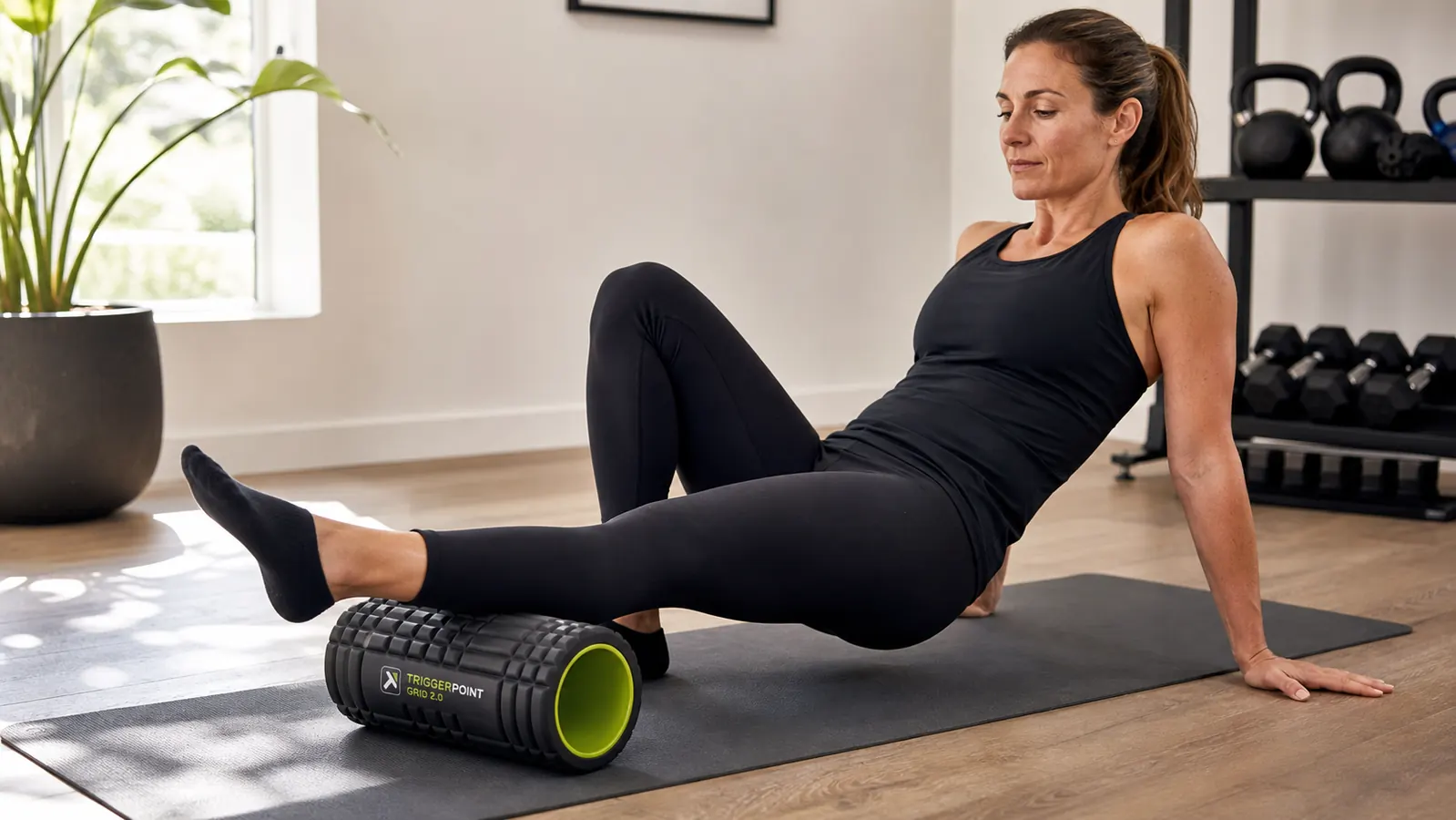
Where the Lacrosse Ball Wins
The lacrosse ball earns its place when you need precision. A foam roller physically cannot get into the piriformis the way a lacrosse ball can when you sit on it and cross one ankle over the opposite knee. It cannot work the plantar fascia from the arch to the ball of the foot while you stand and apply full body weight. It cannot get between the shoulder blade and spine while you lean against a wall. For these applications, the small, firm ball is simply the right tool.
The other genuine advantage is price and portability. A standard lacrosse ball costs a few dollars at any sporting goods store, fits in a jacket pocket, and weighs almost nothing. If you travel frequently for training, a lacrosse ball travels more easily than any roller. And for the spots where it works best, the hard rubber surface provides extremely firm, concentrated pressure that some athletes with dense musculature genuinely prefer over a foam roller's distributed load.
The foam roller is the better all-around recovery tool. The lacrosse ball is a precision instrument for specific spots the roller can never reach. Owning both costs under $80 total.

How We Actually Tested Both
We incorporated both tools into recovery sessions across a range of training types: two lower-body lifting days per week, three running days, and occasional CrossFit-style conditioning. For rolling sessions, we followed the same basic protocol with each tool: two minutes on each target muscle group, slow pace (roughly one inch per second), pausing for ten seconds on any spots that felt particularly restricted. We rotated which tool we used first to control for order effects.
The clearest patterns that emerged: the GRID 2.0 produced noticeably more consistent full-muscle relief on the quads, hamstrings, and calves after running. The IT band is a contested area where neither tool is painless, but the foam roller allowed more gradual pressure loading than the lacrosse ball, which made it easier to stay on tight spots without tensing up. For the upper thoracic spine, both tools work but the foam roller lets you go supine and breathe into the stretch, which the lacrosse ball on the floor simply does not replicate. For the glutes and piriformis area, the lacrosse ball won clearly, both for precision and for intensity.
A Note on Intensity: More Pressure Is Not Always Better
One thing we noticed in extended testing: a lot of athletes reach for the lacrosse ball because they want the hardest possible pressure, operating on the assumption that more intensity means more release. In reality, tissue that is too aggressively compressed tends to guard rather than release. The GRID 2.0 allows you to unload some body weight through your hands, modulate pressure in real time, and back off if something feels sharp. That modulation is harder with a lacrosse ball, where full body weight against a hard floor or wall can quickly exceed comfortable limits.
The GRID 2.0 is not a soft roller. It is a firm, structured tool with real texture. But it gives you more levers to control the experience. For athletes building a daily rolling habit, that control makes it significantly more sustainable than white-knuckling through a lacrosse ball session on tight quads.
Who Should Buy Which
Buy the TriggerPoint GRID 2.0 if you want one recovery tool that covers the most ground: large muscle groups, thoracic mobility work, IT band and calf rolling, and general post-training stiffness. It is the better daily-use tool for runners, lifters, cyclists, and anyone who trains lower body frequently. If you already own a foam roller and want to upgrade to one that holds its shape and gives you varied surface texture, the GRID 2.0 is the upgrade that makes sense.
Add a lacrosse ball if you have specific tight spots that a foam roller simply cannot reach: piriformis, plantar fascia, pec minor, suboccipitals. At three to eight dollars, it is not a competing purchase, it is a complement. Many athletes who start with the GRID 2.0 pick up a lacrosse ball within a few weeks once they realize what the larger tool cannot do.
Skip the lacrosse ball as your only tool if you are new to self-myofascial release. The pressure is difficult to regulate, the technique is less intuitive, and the coverage is too limited to build a full-body rolling routine around it. Start with the foam roller, build the habit, then add the ball for precision work.
The GRID 2.0 is the right starting point, and for most athletes, the only foam roller they will ever need.
Nearly 5,000 Amazon reviewers and most physical therapists agree: the TriggerPoint GRID 2.0 is the benchmark for structured foam rolling. The hollow core design means it will not collapse with regular use, and the multi-density grid surface gives you something no basic smooth roller can match.
Amazon Check Today's Price on Amazon →